Pneumatic tools are powered by compressed air and include chippers, drills, hammers, and sanders. There are several dangers associated with the use of pneumatic tools.
First and foremost is the danger of getting hit by one of the tool's attachments or by some kind of fastener the worker is using with the tool.
Pneumatic tools must be checked to see that the tools are fastened securely to the air hose to prevent them from becoming disconnected. A short wire or positive locking device attaching the air hose to the tool must also be used and will serve as an added safeguard.
If an air hose is more than 12.7 millimeters in diameter, a safety excess flow valve must be installed at the source of the air supply to reduce pressure in case of hose failure.
In general, the same precautions should be taken with an air hose that are recommended for electric cords, because the hose is subject to the same kind of damage or accidental striking, and because it also presents tripping hazards.
When using pneumatic tools, a safety clip or retainer must be installed to prevent attachments such as chisels on a chipping hammer from being ejected during tool operation.
Pneumatic tools that shoot nails, rivets, staples, or similar fasteners and operate at pressures more than 6,890 kPa, must be equipped with a special device to keep fasteners from being ejected, unless the muzzle is pressed against the work surface.
Airless spray guns that atomize paints and fluids at pressures of 6,890 kPa or more must be equipped with automatic or visible manual safety devices that will prevent pulling the trigger until the safety device is manually released.
Eye protection is required, and head and face protection is recommended for employees working with pneumatic tools.
Screens must also be set up to protect nearby workers from being struck by flying fragments around chippers, riveting guns, staplers, or air drills.
Compressed air guns should never be pointed toward anyone.
Workers should never "dead-end" them against themselves or anyone else. A chip guard must be used when compressed air is used for cleaning.
Use of heavy jackhammers can cause fatigue and strains. Heavy rubber grips reduce these effects by providing a secure handhold.
Workers operating a jackhammer must wear safety glasses and safety shoes that protect them against injury if the jackhammer slips or falls. A face shield also should be used.
Noise is another hazard associated with pneumatic tools. Working with noisy tools such as jackhammers requires proper, effective use of appropriate hearing protection.

TOP 12 WAYS TO PREVENT DANGER IN USING POWER TOOLS
Power tools are determined by their power source: electric, pneumatic, liquid fuel, hydraulic, and powder-actuated. Power tools should be equipped with guards and safety switches.
Personal protective equipment such as safety goggles and gloves should be worn to protect against hazards that may be encountered while using power tools.
To prevent hazards associated with the use of power tools, workers should observe the following general precautions:
1. Never carry a tool by the cord or hose.
2. Never yank the cord or the hose to disconnect it from the receptacle.
3. Keep cords and hoses away from heat, oil, and sharp edges.
4. Disconnect tools when not using them, before servicing and cleaning them, and when changing accessories such as blades, bits, and cutters.
5. Keep all people not involved with the work at a safe distance from the work area.
6. Secure work with clamps or a vise, freeing both hands to operate the tool.
7. Avoid accidental starting. Do not hold fingers on the switch button while carrying a plugged-in tool.
8. Maintain tools with care; keep them sharp and clean for best performance.
9. Follow instructions in the user's manual for lubricating and changing accessories.
10. Be sure to keep good footing and maintain good balance when operating power tools.
11. Wear proper apparel for the task. Loose clothing, ties, or jewelry can become caught in moving parts.
12. Remove all damaged portable electric tools from use and tag them: "Do Not Use."
Personal protective equipment such as safety goggles and gloves should be worn to protect against hazards that may be encountered while using power tools.
To prevent hazards associated with the use of power tools, workers should observe the following general precautions:
1. Never carry a tool by the cord or hose.
2. Never yank the cord or the hose to disconnect it from the receptacle.
3. Keep cords and hoses away from heat, oil, and sharp edges.
4. Disconnect tools when not using them, before servicing and cleaning them, and when changing accessories such as blades, bits, and cutters.
5. Keep all people not involved with the work at a safe distance from the work area.
6. Secure work with clamps or a vise, freeing both hands to operate the tool.
7. Avoid accidental starting. Do not hold fingers on the switch button while carrying a plugged-in tool.
8. Maintain tools with care; keep them sharp and clean for best performance.
9. Follow instructions in the user's manual for lubricating and changing accessories.
10. Be sure to keep good footing and maintain good balance when operating power tools.
11. Wear proper apparel for the task. Loose clothing, ties, or jewelry can become caught in moving parts.
12. Remove all damaged portable electric tools from use and tag them: "Do Not Use."
TOP 5 HAZARD OF HAND TOOLS IN CONSTRUCTION AND ELECTRICAL WORKS
What are the Hazards of Hand Tools?
Employees should be trained in the proper use and handling of tools and equipment. The greatest hazards posed by hand tools result from misuse and improper maintenance.
Some examples include:
• Using a chisel as a screwdriver, the tip of the chisel may break and fly off, hitting the user or other employees.
• If a wooden handle on a tool is loose, splintered, or cracked, the head of the tool may fly off and strike the
user or other employees.
• If the jaws of a wrench are sprung, the wrench might slip.
• If impact tools such as chisels, wedges, or drift pins have mushroomed heads, the heads might shatter on impact, sending sharp fragments flying toward the user or other employees.
• When working in close proximity, employees should target saw blades, knives, or other tools away from away aisle areas and other employees. Knives and scissors must be sharp; dull tools can cause more hazards than sharp ones. Cracked saw blades must be removed from service.
Wrenches must not be used when jaws are sprung to the point that slippage occurs. Impact tools such as drift pins, wedges, and chisels must be kept free of mushroomed heads.
Iron or steel hand tools may produce sparks that can be an ignition source around flammable substances. Where this hazard exists, spark-resistant tools made of non-ferrous materials should be used where flammable gases, highly volatile liquids, and other explosive substances are stored or used.
Employees should be trained in the proper use and handling of tools and equipment. The greatest hazards posed by hand tools result from misuse and improper maintenance.
Some examples include:
• Using a chisel as a screwdriver, the tip of the chisel may break and fly off, hitting the user or other employees.
• If a wooden handle on a tool is loose, splintered, or cracked, the head of the tool may fly off and strike the
user or other employees.
• If the jaws of a wrench are sprung, the wrench might slip.
• If impact tools such as chisels, wedges, or drift pins have mushroomed heads, the heads might shatter on impact, sending sharp fragments flying toward the user or other employees.
• When working in close proximity, employees should target saw blades, knives, or other tools away from away aisle areas and other employees. Knives and scissors must be sharp; dull tools can cause more hazards than sharp ones. Cracked saw blades must be removed from service.
Wrenches must not be used when jaws are sprung to the point that slippage occurs. Impact tools such as drift pins, wedges, and chisels must be kept free of mushroomed heads.
Iron or steel hand tools may produce sparks that can be an ignition source around flammable substances. Where this hazard exists, spark-resistant tools made of non-ferrous materials should be used where flammable gases, highly volatile liquids, and other explosive substances are stored or used.
GROUNDING OF ELECTRICAL EQUIPMENT SYSTEM FOR SAFETY
Grounded electrical systems are required to be connected to earth in such a way as to limit any voltages imposed by lightning, line surges, or unintentional contact with higher voltage lines. Electrical systems are also grounded to stabilize the voltage to earth during normal operation.
If, for example, the neutral of a 120/240 V, wye-connected secondary of a transformer were not grounded, instead of being 120 V to ground, the voltage could reach several hundred volts to ground. A wye-connected electrical system becomes very unstable if it is not properly grounded.
OSHA 1910.304(f)(7)(iii) Grounding of equipment. All non-current-carrying metal parts of portable equipment and fixed equipment including their associated fences, housings, enclosures, and supporting structures shall be grounded.
However, equipment that is guarded by location and isolated from ground need not be grounded. Additionally, polemounted distribution apparatus at a height exceeding 8 feet above ground or grade level need not be grounded.
In 29 CFR 1910.303, “General Requirements,” OSHA states under “(b) Examination, installation, and use of equipment (1) Examination” that “Electrical equipment shall be free from recognized hazards that are likely to cause death or serious physical harm to employees.”
This section continues with “other factors which contribute to the practical safeguarding of employees using or likely to come in contact with the equipment.” One of these “other factors” is proper grounding.
If the non-current-carrying metal parts of electric equipment are not properly grounded and these parts become energized, then any employee “using or likely to come in contact with the equipment” is at risk of an electrical shock that may or may not be fatal. This is a risk that must not be taken.
Proper grounding can effectively eliminate this shock hazard by providing a permanent and continuous low impedance path
If, for example, the neutral of a 120/240 V, wye-connected secondary of a transformer were not grounded, instead of being 120 V to ground, the voltage could reach several hundred volts to ground. A wye-connected electrical system becomes very unstable if it is not properly grounded.
OSHA 1910.304(f)(7)(iii) Grounding of equipment. All non-current-carrying metal parts of portable equipment and fixed equipment including their associated fences, housings, enclosures, and supporting structures shall be grounded.
However, equipment that is guarded by location and isolated from ground need not be grounded. Additionally, polemounted distribution apparatus at a height exceeding 8 feet above ground or grade level need not be grounded.
In 29 CFR 1910.303, “General Requirements,” OSHA states under “(b) Examination, installation, and use of equipment (1) Examination” that “Electrical equipment shall be free from recognized hazards that are likely to cause death or serious physical harm to employees.”
This section continues with “other factors which contribute to the practical safeguarding of employees using or likely to come in contact with the equipment.” One of these “other factors” is proper grounding.
If the non-current-carrying metal parts of electric equipment are not properly grounded and these parts become energized, then any employee “using or likely to come in contact with the equipment” is at risk of an electrical shock that may or may not be fatal. This is a risk that must not be taken.
Proper grounding can effectively eliminate this shock hazard by providing a permanent and continuous low impedance path
ELECTRICAL FIRES AND EXTINGUISHERS
Electricity is one of the most common causes of fires and thermal burns in homes and workplaces. Defective or misused electrical equipment is a major cause of electrical fires.
If there is a small electrical fire, be sure to use only a Class C or multipurpose (ABC) fire extinguisher, or you might make the problem worse. All fire extinguishers are marked with letter(s) that tell you the kinds of fires they can put out. Some extinguishers contain symbols, too.
The letters and symbols are explained below (including suggestions on how to remember them).
A(think: Ashes) = paper, wood, etc.
B(think: Barrel) = flammable liquids
C(think: Circuits) = electrical fires

All fire extinguishers are marked with a letter(s), which identifies the kinds of fires they put out. Sometimes the label is marked with both a letter and symbol. Be sure to read the label and use the appropriate extinguisher.
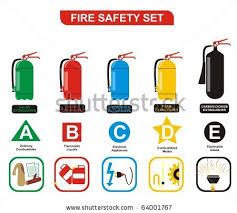
If there is a small electrical fire, be sure to use only a Class C or multipurpose (ABC) fire extinguisher, or you might make the problem worse. All fire extinguishers are marked with letter(s) that tell you the kinds of fires they can put out. Some extinguishers contain symbols, too.
The letters and symbols are explained below (including suggestions on how to remember them).
A(think: Ashes) = paper, wood, etc.
B(think: Barrel) = flammable liquids
C(think: Circuits) = electrical fires
All fire extinguishers are marked with a letter(s), which identifies the kinds of fires they put out. Sometimes the label is marked with both a letter and symbol. Be sure to read the label and use the appropriate extinguisher.
Subscribe to:
Posts (Atom)